

ASE Certified Strengths
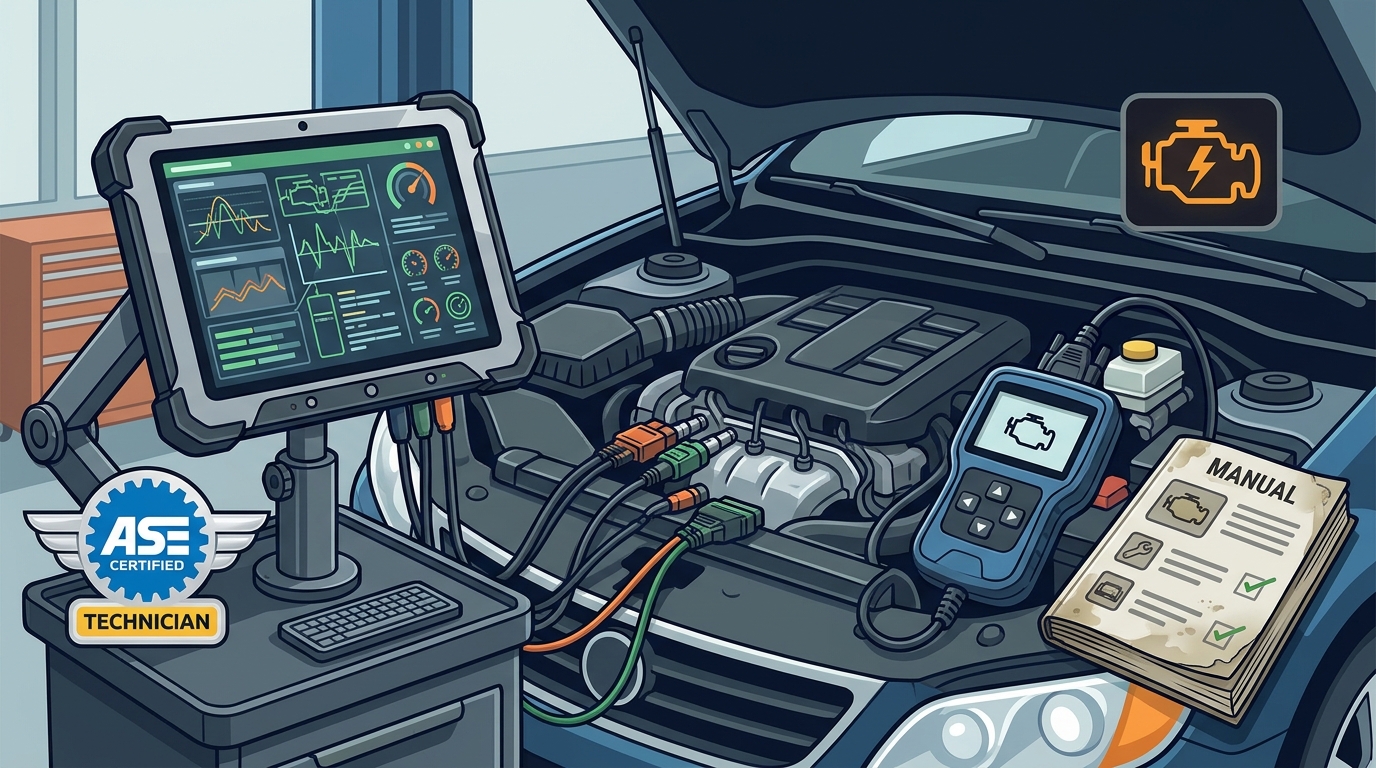
ASE certification is a national standard that validates a technician's knowledge through rigorous testing. It ensures the mechanic understands modern engine management systems, emissions controls, and electronic diagnostics. For a check engine light, this means the technician is trained to interpret complex data streams rather than just reading generic codes. This reduces the chance of misdiagnosis, which is a common issue with less experienced staff. GNL Auto Service employs technicians who meet these high standards, ensuring your vehicle receives accurate attention.
Standardized Knowledge
ASE tests cover specific areas like engine performance and electrical systems. Passing these tests proves the technician has a baseline of verified knowledge. This is crucial for vehicles with complex computer systems. It provides a level of confidence that informal experience alone cannot guarantee. You are paying for proven competence, not just years on the job. For additional details, review the .
Continuing Education
ASE certification is not a one-time event. Technicians must renew their certifications every five years. This requirement forces them to stay current with evolving automotive technology. As cars become more like computers on wheels, this ongoing education is vital. It ensures the technician can handle the latest diagnostic protocols and software updates. For additional details, review the Customer Experience.
Non-Certified Limits
Non-certified technicians may have significant hands-on experience but lack formal validation of their diagnostic skills. They might rely on intuition or older repair methods that do not apply to modern vehicles. For a check engine light, this can lead to trial-and-error repairs. You might pay for parts that do not fix the underlying issue. While some non-certified shops are excellent, the lack of a standardized benchmark makes it harder to assess their capability upfront. For additional details, review the Frequently Asked Questions.
Diagnostic Uncertainty
Without ASE certification, there is no standardized proof of diagnostic proficiency. The technician may guess at the problem based on symptoms. This approach works for simple issues but fails for complex electronic faults. It can result in multiple visits and higher total costs. The risk of misdiagnosis is significantly higher without a certified framework. For additional details, review the About.
Variable Quality
Quality at non-certified shops varies widely. Some are master mechanics who simply did not take the tests. Others are less experienced. You have no way to know which type you are dealing with. This variability makes it difficult to make an informed decision based on credentials alone. You are essentially taking a gamble on the individual technician's skill level.
Comparison Table
| Criteria | ASE Certified Technician | Non-Certified Technician |
|---|---|---|
| Diagnostic Accuracy | High, based on tested knowledge | Variable, based on experience |
| Cost | Higher hourly rate | Lower hourly rate |
| Continuing Education | Mandatory renewal every 5 years | Not required |
| Risk of Misdiagnosis | Low | Higher |
| Best For | Modern, complex vehicles | Simple, older vehicles |
Choose ASE If
Choose an ASE certified technician if your vehicle is less than ten years old. Modern cars rely heavily on electronic systems that require specific diagnostic training. If the check engine light is accompanied by other symptoms like rough idling or power loss, certification matters. It ensures the technician can handle the complexity. GNL Auto Service is a strong choice for this type of vehicle in the Walpole area. Their focus on engine and transmission repair aligns with the needs of modern drivers.
Choose Non-ASE If
Choose a non-certified technician if your vehicle is older and has a simpler mechanical design. If the issue is clearly mechanical, such as a broken belt or leak, experience may be sufficient. If you are on a strict budget and the vehicle is not a primary commuter, lower rates might be worth the risk. However, be aware that misdiagnosis can cost more in the long run. Always ask for a clear explanation of the work before authorizing repairs.
Frequently Asked Questions
Is ASE certification a legal requirement?
No, ASE certification is voluntary. It is not required by law to work as an auto mechanic. However, many reputable shops require it as a standard for their staff. It serves as a quality benchmark for consumers.
Can a non-certified tech fix a check engine light?
Yes, a non-certified technician can fix a check engine light. However, they may lack the specific training to diagnose complex electronic issues accurately. This can lead to incorrect repairs or missed problems.
How much more does an ASE certified tech cost?
ASE certified technicians typically charge higher hourly rates than non-certified ones. The exact difference varies by shop and region. The higher cost reflects the investment in testing and continuing education.
Does GNL Auto Service use ASE certified techs?
GNL Auto Service emphasizes professional expertise and quality diagnostics. They position themselves as a trusted local alternative to national chains. Their focus on clear explanations and honest recommendations aligns with the standards expected of certified professionals.
What if the certified tech cannot find the problem?
If an ASE certified technician cannot find the problem, they should explain their findings clearly. They may recommend further specialized testing. This transparency is a key benefit of working with certified professionals. You should rarely feel pressured into unnecessary repairs.
Is it worth paying more for certification?
For most modern vehicles, yes. The cost of a misdiagnosis often exceeds the difference in hourly rates. Certification provides a level of assurance that informal experience does not. It is an investment in getting the problem fixed correctly the first time.