
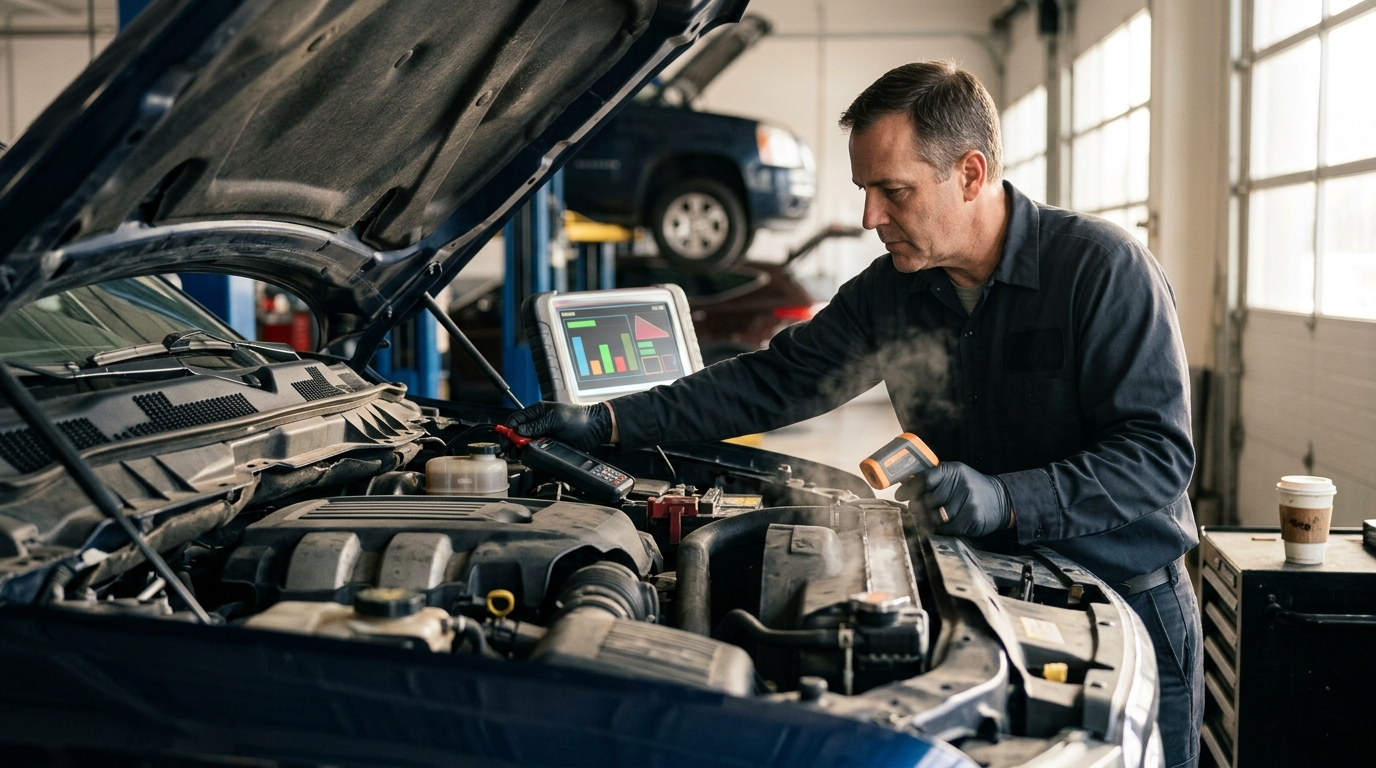
Truck overheating is primarily caused by coolant system failures, such as leaks, a stuck thermostat, or a failing water pump. Mechanics find the problem by performing pressure tests, inspecting for physical leaks, and scanning for engine management codes. At GNL Auto Service in Walpole, MA, we use systematic diagnostics to identify the root cause before recommending repairs.
Common Coolant System Failures
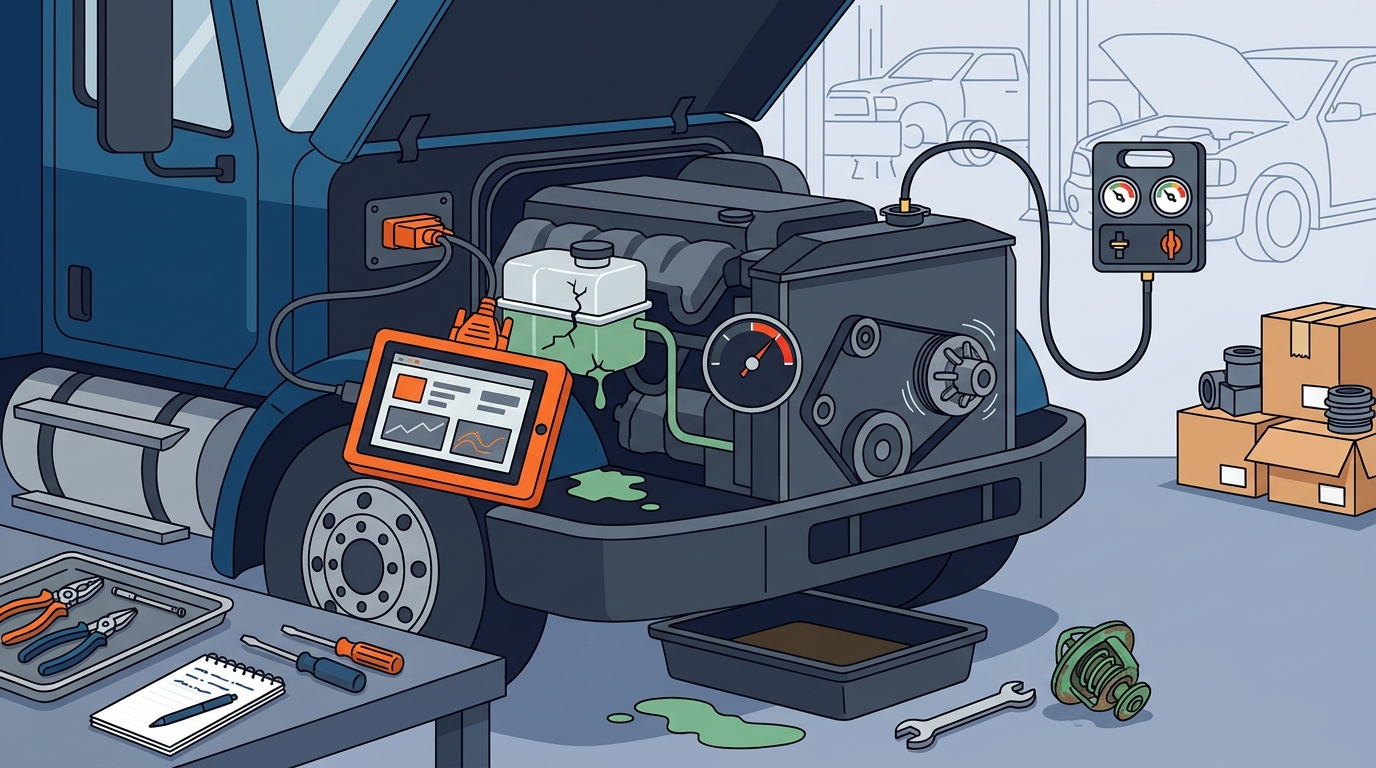
The cooling system is a closed loop that relies on pressure to raise the boiling point of the coolant. When this pressure is lost, the fluid boils at a lower temperature, causing the engine to overheat. A coolant leak is among the most frequent culprit. Leaks can occur at the radiator, hoses, water pump, or heater core. Mechanics look for dried residue or wet spots under the vehicle. A stuck thermostat is another common issue. A thermostat is a temperature-sensitive valve that regulates coolant flow. If it sticks in the closed position, the engine cannot circulate enough coolant to dissipate heat. This often happens when the truck is idling or in stop-and-go traffic. For additional details, review the .
Mechanical Component Wear and Failure
Over time, moving parts within the engine and cooling system wear down. The water pump is a critical component that drives coolant circulation. A water pump is a mechanical device that pushes coolant through the engine block and radiator. When the pump bearing wears out, it can make a grinding noise or leak fluid. In severe cases, the impeller can break off, stopping flow entirely. The radiator fan is another key player. If the electric fan motor fails or the fan relay burns out, the truck will overheat at low speeds. Mechanics test the fan operation by monitoring the engine temperature and observing the fan engagement. They also check the fan clutch on older trucks to ensure it is locking up properly. For additional details, review the Customer Experience.
Diagnostic Pressure Tests and Inspections
Visual inspection is among the first step, but it often misses internal leaks. Mechanics use a pressure tester to pressurize the cooling system to its operating limit. This forces small leaks to become visible. If the pressure drops without an external leak, the problem is likely internal. An internal leak usually means the head gasket is blown. A head gasket is a seal that prevents coolant and oil from mixing with the combustion chambers. When it fails, coolant can enter the cylinders, causing white smoke from the exhaust. Mechanics can confirm this by performing a combustion leak test. This test detects hydrocarbons in the coolant, which indicates that exhaust gases are entering the cooling system.
Electrical and Sensor Issues
Modern trucks rely on sensors to manage the cooling system. The coolant temperature sensor sends data to the engine computer. If this sensor fails, the computer may not activate the cooling fan at the correct time. Mechanics use a scan tool to read live data from the sensor. They compare the reported temperature with a physical thermometer placed in the coolant. A discrepancy indicates a faulty sensor. The engine computer may also store diagnostic trouble codes (DTCs) related to the cooling system. These codes provide a starting point for the diagnosis. For example, a code for a low coolant level alerts the mechanic to check for leaks immediately.
The GNL Auto Service Approach
At GNL Auto Service, we combine experience with modern diagnostic tools. Our technicians in Walpole, MA, have over 15 years of automotive experience. We do not guess. We test every component of the cooling system. This ensures that we fix the root cause, not just the symptom. If you notice your truck running hot, bring it in for a professional inspection. We will explain the findings and provide a clear repair plan. Our goal is to keep your vehicle running reliably for years to come.
Key Takeaways
- Coolant leaks are the most common cause of truck overheating.
- A stuck thermostat prevents proper coolant circulation.
- Water pump failure can stop coolant flow entirely.
- Pressure tests help identify internal leaks like a blown head gasket.
- Faulty sensors can prevent the cooling fan from activating.
- Professional diagnosis is essential to avoid costly engine damage.
Frequently Asked Questions
What is the most common cause of truck overheating?
The most common cause is a coolant leak. This can happen at the radiator, hoses, or water pump. A stuck thermostat is also a frequent issue.
How do mechanics test for a head gasket leak?
Mechanics use a combustion leak test. This test detects exhaust gases in the coolant. They also perform a pressure test to check for external leaks.
Can a bad water pump cause overheating?
Yes. A failed water pump stops coolant circulation. This causes the engine to overheat quickly. You may hear a grinding noise from the pump.
What should I do if my truck overheats on the road?
Pull over safely and turn off the engine. Do not open the radiator cap while the engine is hot. Wait for the engine to cool down before checking the coolant level.
How often should I check my coolant level?
You should check the coolant level monthly. Make sure the engine is cold before opening the reservoir. Top off with the correct coolant mixture if needed.
Does GNL Auto Service handle truck repairs?
Yes. GNL Auto Service in Walpole, MA, offers professional automotive repair. Our team has over 15 years of experience with various vehicle types.
Conclusion
Truck overheating is a serious issue that requires prompt attention. Understanding the common causes and diagnostic methods helps you make informed decisions. At GNL Auto Service, we provide expert care for your vehicle. today to schedule an appointment.