
Engine Rebuild vs. Replacement: Which Repair Option Fits Your Vehicle?
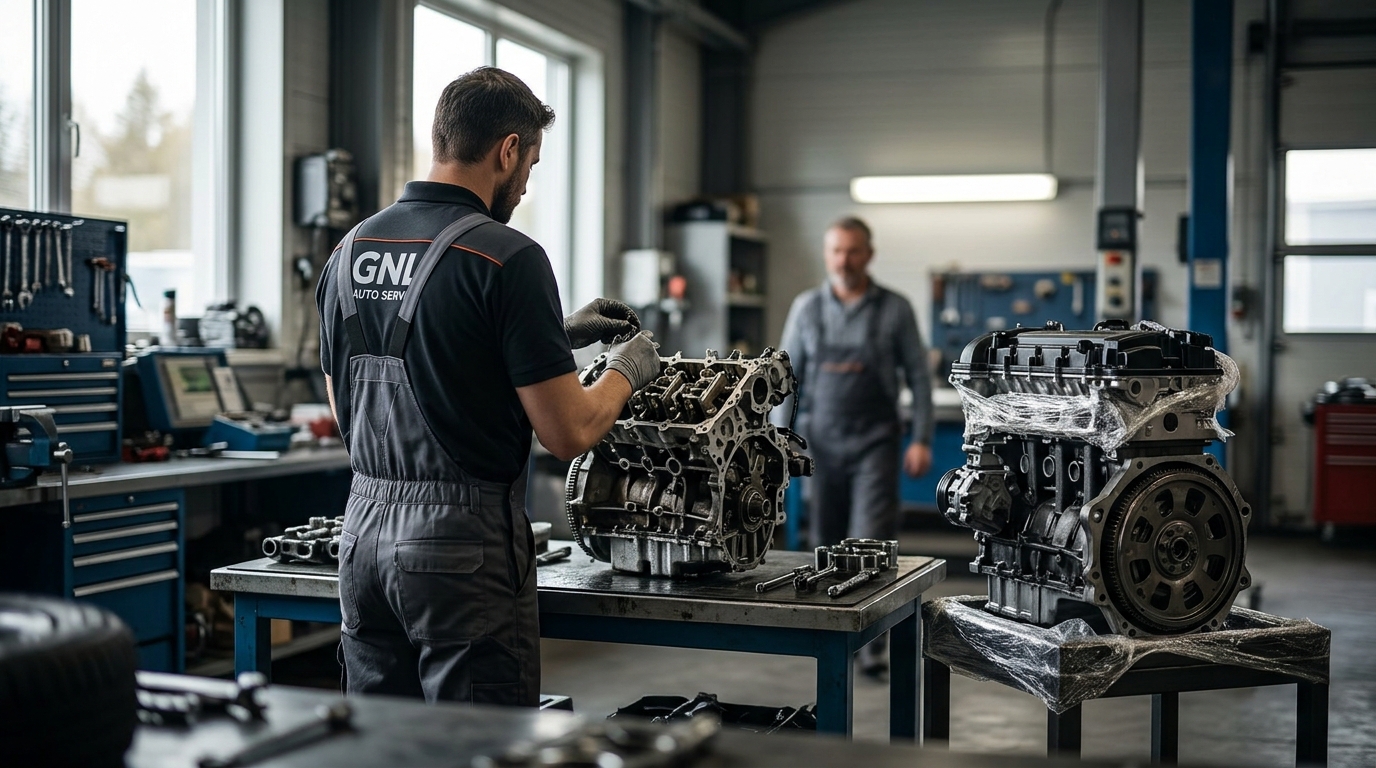
Choosing between a full engine rebuild and a replacement is a critical financial and mechanical decision for any driver. A full engine rebuild is the process of completely disassembling an engine, machining or replacing worn internal components, and reassembling it to factory specifications. This approach is often more cost-effective than a replacement when the engine block and head are structurally sound. However, a replacement engine is a pre-assembled unit, either new or remanufactured, that swaps the entire powertrain. GNL Auto Service in Walpole, MA, provides expert diagnostics to help you determine which path offers the best long-term value for your specific vehicle.
Understanding the Core Repair Options
When an engine begins to fail, drivers typically face three primary choices. The first is a full engine rebuild, which restores the existing engine to like-new condition. The second is a replacement with a new or remanufactured engine. The third is a partial repair, such as replacing only the most critical failing components. Each option carries distinct advantages and limitations depending on the vehicle's age, mileage, and the specific nature of the failure.
The Full Engine Rebuild
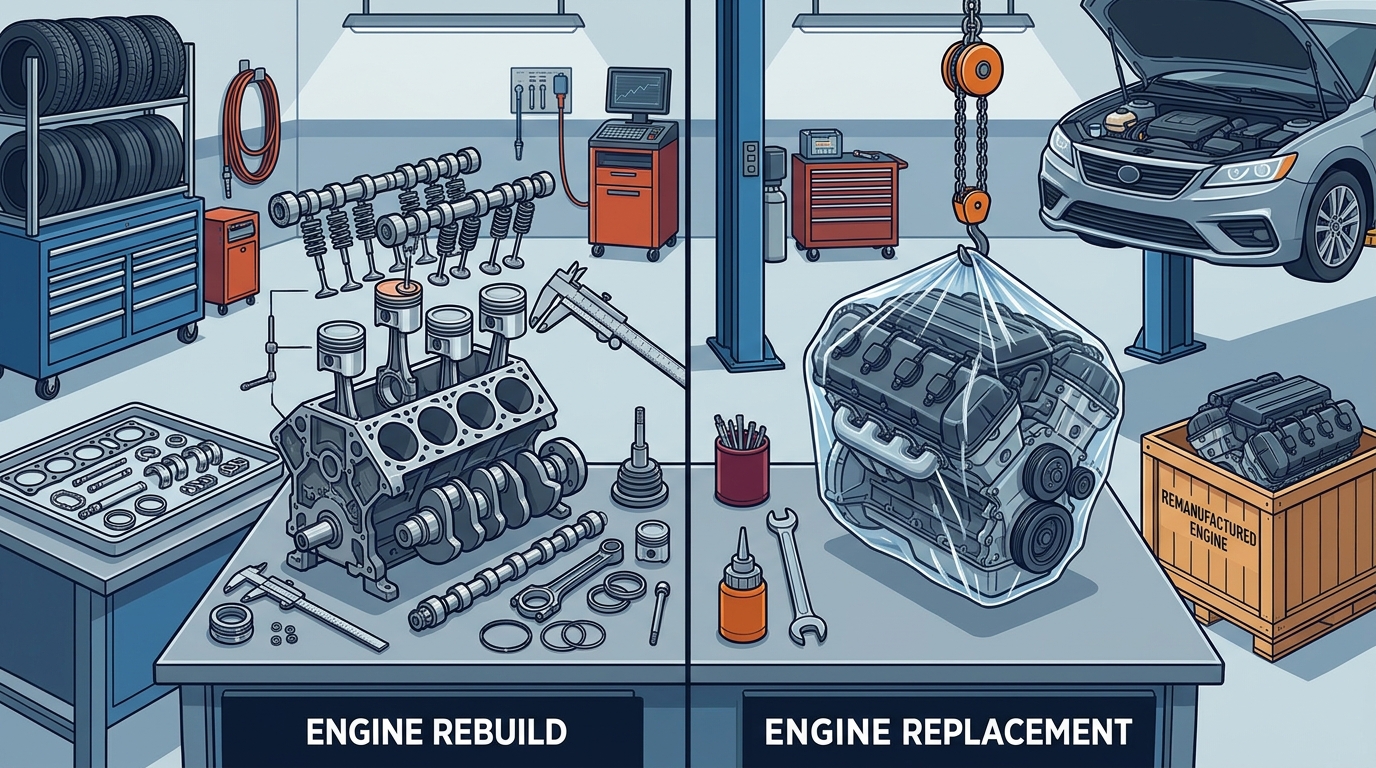
A full engine rebuild is a comprehensive restoration process. Technicians remove the engine from the vehicle and disassemble it into its smallest parts. Every component is inspected for wear, cracks, or damage. Worn parts such as pistons, bearings, and gaskets are replaced, while critical surfaces like the crankshaft and cylinder bores are machined to precise tolerances. This method preserves the original engine's identity and can extend its life significantly.
The Replacement Engine
A replacement engine is a complete unit that is installed in place of the failed one. These engines can be brand new, remanufactured by the manufacturer, or used from a donor vehicle. The primary advantage of a replacement is speed. Because the engine is pre-assembled, the installation process is often faster than a full rebuild. However, the cost is typically higher, and the long-term reliability depends on the quality of the replacement unit.
Partial Repairs and Component Swaps
Partial repairs involve addressing specific failures without disassembling the entire engine. For example, if a timing chain has failed, a technician might replace only the chain and tensioner. This option is suitable when the damage is isolated and the rest of the engine is healthy. It is generally the least expensive option but may not address underlying wear that could cause future failures.
Comparing Rebuilds, Replacements, and Partial Repairs
The following table summarizes the key differences between these three repair options. This comparison helps drivers understand the trade-offs between cost, time, and long-term reliability.
| Criteria | Full Engine Rebuild | Replacement Engine | Partial Repair |
|---|---|---|---|
| Cost | Moderate to High | High | Low to Moderate |
| Time to Complete | Long (2-4 weeks) | Short (3-7 days) | Short (1-3 days) |
| Long-Term Reliability | High (if done correctly) | Variable (depends on source) | Moderate (risk of future failure) |
| Vehicle Value Impact | Positive (restored originality) | Neutral to Positive | Neutral |
| Best For | High-mileage vehicles with sound blocks | Low-mileage vehicles or catastrophic failure | Isolated component failures |
Strengths and Limits of a Full Engine Rebuild
However, a rebuild has significant limitations. It is a time-consuming process that requires specialized equipment and expertise. The cost can be substantial, especially if the engine requires extensive machining. Additionally, a rebuild is not suitable for engines with cracked blocks or severe internal damage. In such cases, a replacement is the only viable option.
Strengths and Limits of a Replacement Engine
The primary limitation of a replacement engine is cost. New engines are expensive, and even remanufactured units can be costly. Additionally, the long-term reliability of a replacement engine depends on the quality of the unit and the installation process. Used engines, in particular, may have hidden issues that are not apparent during a basic inspection.
Strengths and Limits of Partial Repairs
Partial repairs are the most cost-effective option for isolated failures. If a specific component, such as a water pump or timing chain, has failed, replacing only that part can restore the engine's function at a fraction of the cost of a rebuild or replacement. This option is suitable for vehicles with lower mileage and engines that are otherwise in good condition.
The limitation of a partial repair is that it does not address underlying wear. If the engine has high mileage, other components may be nearing the end of their service life. A partial repair may provide a temporary fix, but it may not prevent future failures. Drivers should consider the overall condition of the engine before choosing this option.
Choosing the Right Option for Your Vehicle
Choosing the right repair option depends on several factors, including the vehicle's age, mileage, and the specific nature of the failure. Here is some guidance to help you make an informed decision.
Choose a Full Engine Rebuild If
Choose a full engine rebuild if your vehicle has high mileage but a structurally sound engine block. This option is ideal for drivers who want to extend the life of their vehicle and are willing to invest in a comprehensive restoration. A rebuild is also a good choice for classic or high-value vehicles where preserving the original engine is important.
Choose a Replacement Engine If
Choose a replacement engine if your vehicle has low mileage or if the engine has suffered catastrophic damage. This option is suitable for drivers who need their vehicle quickly and are willing to pay a premium for a pre-assembled unit. A replacement is also a good choice if the engine block is cracked or damaged beyond repair.
Choose a Partial Repair If
Choose a partial repair if the failure is isolated and the rest of the engine is in good condition. This option is suitable for drivers with lower-mileage vehicles who want a cost-effective solution. However, drivers should be aware that a partial repair may not address underlying wear that could cause future failures.
Frequently Asked Questions
Is a full engine rebuild more expensive than a replacement?
A full engine rebuild is often less expensive than a new replacement engine, but it can be more costly than a partial repair. The total cost depends on the extent of the damage and the specific components that need to be replaced or machined.
How long does a full engine rebuild take?
A full engine rebuild typically takes two to four weeks, depending on the complexity of the work and the availability of parts. This is longer than a replacement engine installation, which can take three to seven days.
Can a rebuilt engine last as long as a new one?
A properly executed full engine rebuild can last as long as a new engine, especially if the block and head are in good condition. The key is to use high-quality parts and ensure that all components are machined to precise tolerances.
What happens if the engine block is cracked?
If the engine block is cracked, a full engine rebuild is not possible. In this case, a replacement engine is the only viable option. Cracked blocks cannot be reliably repaired, and attempting to do so may lead to further damage.
How do I know if my engine needs a rebuild or a replacement?
The best way to determine the right repair option is to have a professional diagnostic performed. A qualified technician can inspect the engine and assess the extent of the damage. This will help you make an informed decision based on the specific condition of your vehicle.