

GNL Auto Service in Walpole, MA, specializes in professional engine diagnostics, repairs, and complete rebuilds for Chevy, GMC, and Cadillac vehicles. Understanding the standard phases of an engine rebuild helps you make informed decisions about your vehicle's longevity and performance. This guide outlines the critical steps involved in restoring an engine to optimal condition.
1. Initial Diagnostics and Assessment
Accurate diagnosis determines the scope and cost of the rebuild. Before any physical work begins, technicians perform comprehensive testing to identify the root cause of engine failure. This phase includes compression tests, leak-down tests, and computer diagnostics to pinpoint specific mechanical issues. GNL Auto Service uses precise diagnostic tools to ensure that the repair plan addresses all underlying problems rather than just symptoms. For additional details, review the Customer Experience.
2. Complete Engine Removal
Safe extraction prevents damage to surrounding vehicle components. The engine is carefully disconnected from the transmission, cooling system, and electrical harnesses. Technicians must manage heavy lifting equipment to remove the powertrain assembly without stressing the vehicle's frame or chassis. Proper documentation of all connection points ensures a smooth reinstallation process later in the project. For additional details, review the Frequently Asked Questions.
3. Disassembly and Cleaning
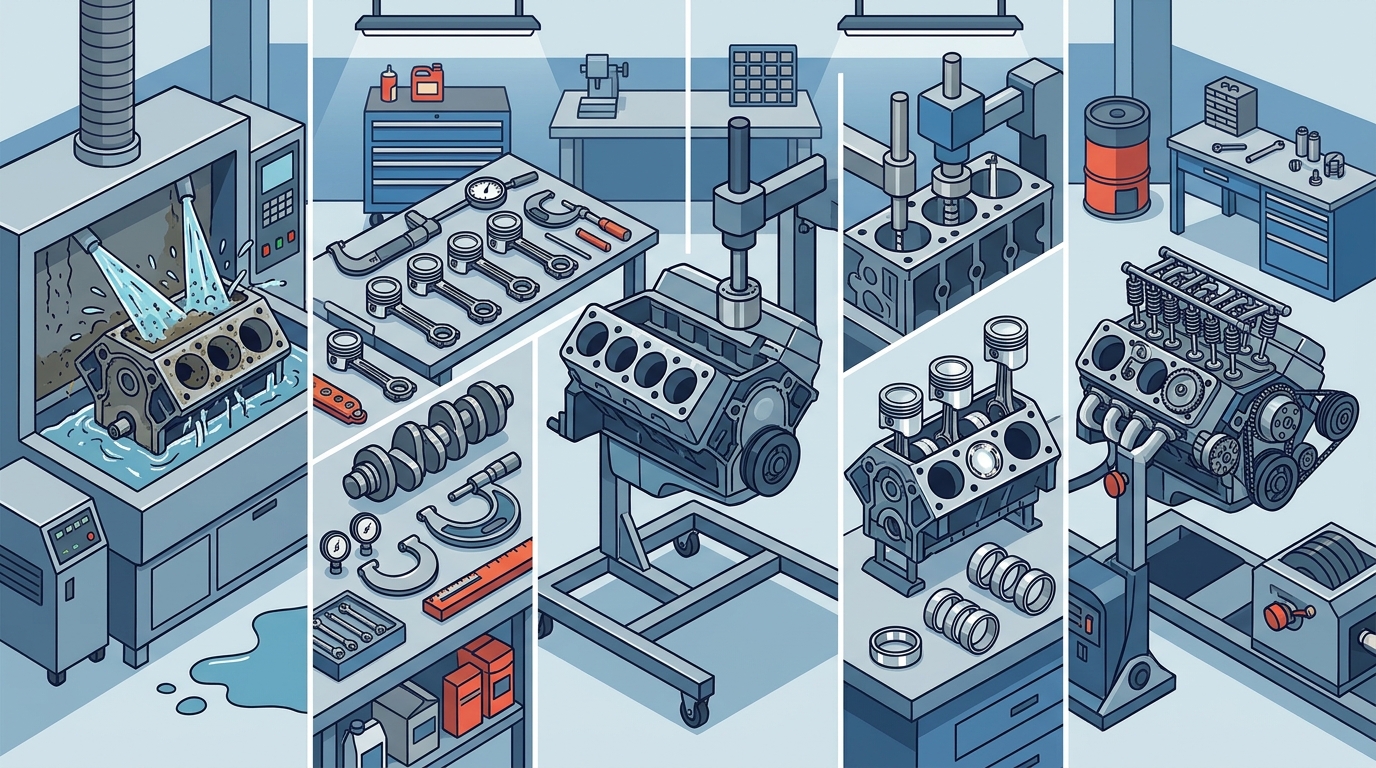
Thorough cleaning reveals hidden defects that visual inspection might miss. The engine is broken down into its core components, including the block, heads, crankshaft, and camshafts. Every part is cleaned using industrial solvents to remove carbon deposits, oil sludge, and debris. This step allows technicians to inspect surfaces for cracks, warping, or excessive wear that requires machining or replacement. For additional details, review the About.
4. Machining and Measurement
Precision machining restores critical dimensions to factory specifications. The engine block is measured for bore size, deck height, and crankshaft journal dimensions. If wear exceeds acceptable tolerances, the block may require boring, honing, or decking. The crankshaft is measured for roundness and taper, and may need grinding to restore proper geometry. These measurements are critical for ensuring proper clearances during reassembly.
5. Component Replacement
6. Reassembly and Torque Specifications
Correct assembly sequence and torque values are essential for engine integrity. Components are reassembled in a specific order to ensure proper seating of gaskets and alignment of moving parts. Technicians apply precise torque specifications to all fasteners, following a defined sequence to prevent warping or uneven stress. Lubrication is applied to all moving surfaces to ensure proper break-in and initial operation.
7. Final Testing and Quality Control
Rigorous testing verifies that the rebuilt engine meets performance standards. The engine is installed back into the vehicle and connected to all systems. Technicians perform initial startup procedures, checking for leaks, proper oil pressure, and correct idle quality. A road test follows to evaluate performance under load and verify that all systems function correctly. GNL Auto Service conducts final inspections to ensure the vehicle is ready for daily driving.
Frequently Asked Questions
How long does a professional engine rebuild typically take?
What is the difference between an engine rebuild and an engine replacement?
An engine rebuild restores the existing engine to working condition by replacing worn internal components, while an engine replacement involves installing a new or remanufactured engine. Rebuilds can be more cost-effective for engines with good block integrity, whereas replacements may be preferable for severely damaged blocks. The choice depends on the extent of damage and your budget.
Do I need to replace the entire engine if it has a blown head gasket?
Not necessarily. A blown head gasket often requires only a head gasket replacement and head resurfacing, which is a smaller repair than a full rebuild. However, if the head is warped or cracked, it may need replacement or machining. GNL Auto Service assesses the specific damage to recommend the most appropriate repair scope.
What should I expect to pay for a professional engine rebuild?
Costs vary significantly based on the vehicle make, model, and extent of damage. A basic rebuild might cost several thousand dollars, while complex performance builds can be substantially higher. GNL Auto Service provides detailed estimates after diagnostics so you can make informed financial decisions.
Is a rebuilt engine as reliable as a new one?
A properly executed rebuild using quality components can provide reliability comparable to a new engine. The key factors are the quality of the rebuild process, the condition of the block, and the quality of replacement parts. Regular maintenance after the rebuild is essential to maximize the lifespan of the restored engine.