

7 Warning Signs Your Truck's Overheating Problem Is Actually Fixed
Truck owners often wonder if a recent repair truly solved their engine temperature issues. GNL Auto Service in Walpole, MA helps drivers distinguish between temporary relief and permanent mechanical stability. This guide outlines the specific, measurable indicators that confirm your cooling system is functioning correctly under real-world conditions.
1. Stable Temperature Gauge
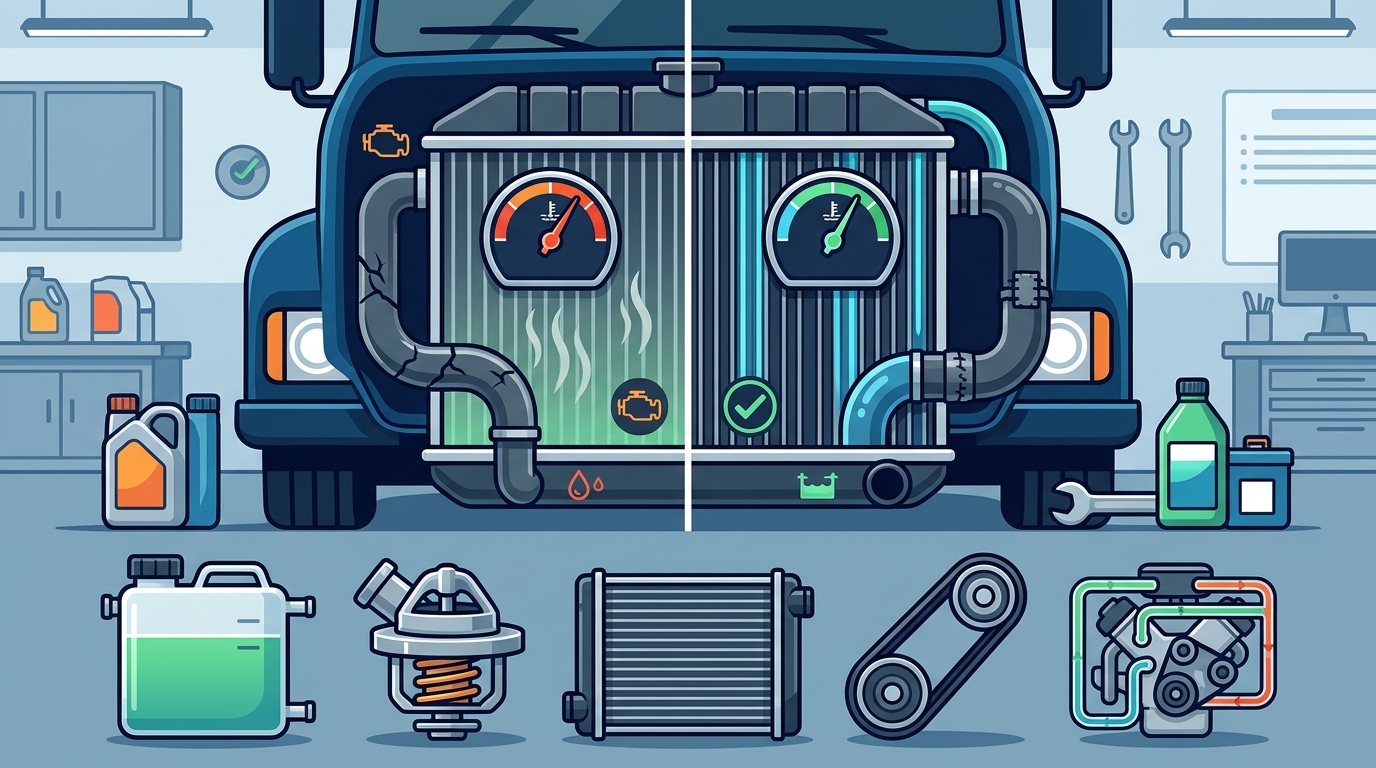
Your temperature gauge remains centered and does not fluctuate during heavy loads. A properly repaired cooling system maintains a consistent engine temperature regardless of traffic conditions or terrain. If the needle stays in the middle of the dial while climbing hills or towing, the thermostat and radiator are working as intended. Fluctuations or a slow climb toward the red zone indicate residual issues with coolant flow or heat dissipation. For additional details, review the Customer Experience.
2. No Coolant Loss
You do not need to top off the coolant reservoir between regular maintenance intervals. Coolant loss is a primary symptom of leaks in hoses, the water pump, or the head gasket. After a successful repair, the fluid level should remain stable for weeks or months. If you find yourself adding fluid frequently, the underlying leak has not been fully addressed or a new failure point has emerged. For additional details, review the Frequently Asked Questions.
3. Consistent Fan Operation
The cooling fan engages and disengages smoothly at the correct temperature thresholds. The electric fan should activate when the engine reaches operating temperature and shut off once it cools down. Irregular cycling, constant running, or failure to engage at all suggests electrical or sensor problems. Proper fan behavior ensures that heat is expelled efficiently during low-speed driving or idling. For additional details, review the About.
4. No Sweet Smells
You do not detect a sweet, syrupy odor inside the cabin or around the engine bay. Coolant has a distinct sweet smell that is often the first sign of a leak. If the air from your vents smells like candy or if you notice a sweet scent near the engine, coolant is likely leaking into the heater core or onto hot engine parts. The absence of this odor is a strong indicator that the internal cooling passages are sealed and intact.
5. Smooth Idle and Acceleration
The engine runs smoothly without hesitation, misfires, or power loss. Overheating can cause engine components to warp or expand, leading to rough idling and reduced performance. When the engine temperature is regulated correctly, the combustion process remains efficient. If your truck accelerates smoothly and idles steadily, it suggests that the engine has not suffered heat-related damage and is operating within its optimal thermal range.
6. No Steam or Hissing
You do not see steam rising from the hood or hear hissing sounds when opening the coolant cap. Steam and hissing are clear signs of excessive pressure or heat in the cooling system. A properly functioning system should not produce these symptoms under normal driving conditions. If you notice steam or hear pressure releasing when checking the coolant, the system is still under stress and requires further inspection.
7. Long-Term Stability
The engine temperature remains normal over several weeks of varied driving conditions. A single day of normal operation is not enough to confirm a permanent fix. Long-term stability means the truck handles summer heat, winter cold, and heavy loads without temperature spikes. This sustained performance is the ultimate proof that the overheating issue has been resolved and the cooling system is robust.
Choosing the Right Verification Method
Use the temperature gauge and coolant level as your primary daily checks. Monitor fan operation and smells during routine drives. If all seven signs are present over a period of several weeks, your truck's overheating problem is likely fixed. For a definitive assessment, professional diagnostics can confirm that all components are within specification.
Frequently Asked Questions
How long should I wait to confirm the overheating fix?
Wait at least two to four weeks of varied driving conditions. This period allows you to test the cooling system in different temperatures and loads. If the temperature remains stable and no leaks appear, the fix is likely permanent.
Is it normal for the temperature gauge to move slightly?
Yes, slight movement is normal as the engine warms up and cools down. The gauge should settle in the middle of the range. Significant movement toward the red zone or the cold end indicates a problem.
What should I do if I still see steam after the repair?
Stop driving immediately and let the engine cool down. Steam indicates a serious issue with pressure or heat. Contact a professional mechanic for an immediate inspection to prevent engine damage.
Does a sweet smell always mean a leak?
Not always, but it is a strong indicator. Coolant has a sweet odor, so if you smell it, check for visible leaks. If no leaks are visible, the heater core may be leaking internally, which requires professional diagnosis.
Can I drive my truck if the temperature is normal but I suspect a leak?
It is risky. A small leak can worsen quickly, leading to overheating and engine damage. It is safer to have the vehicle inspected before driving it long distances or under heavy loads.
How often should I check the coolant level after a repair?
Check the level once a week for the first month. After that, check it monthly or as part of your regular maintenance routine. Consistent monitoring helps catch any residual issues early.
Conclusion
Confirming that your truck's overheating problem is fixed requires attention to specific, measurable signs. By monitoring your temperature gauge, coolant level, and engine performance, you can gain confidence in the repair. GNL Auto Service in Walpole, MA provides the expertise to diagnose and resolve these issues, ensuring your vehicle remains reliable for the long term. If you are unsure about the status of your cooling system, schedule a professional inspection to verify that all components are functioning correctly.