
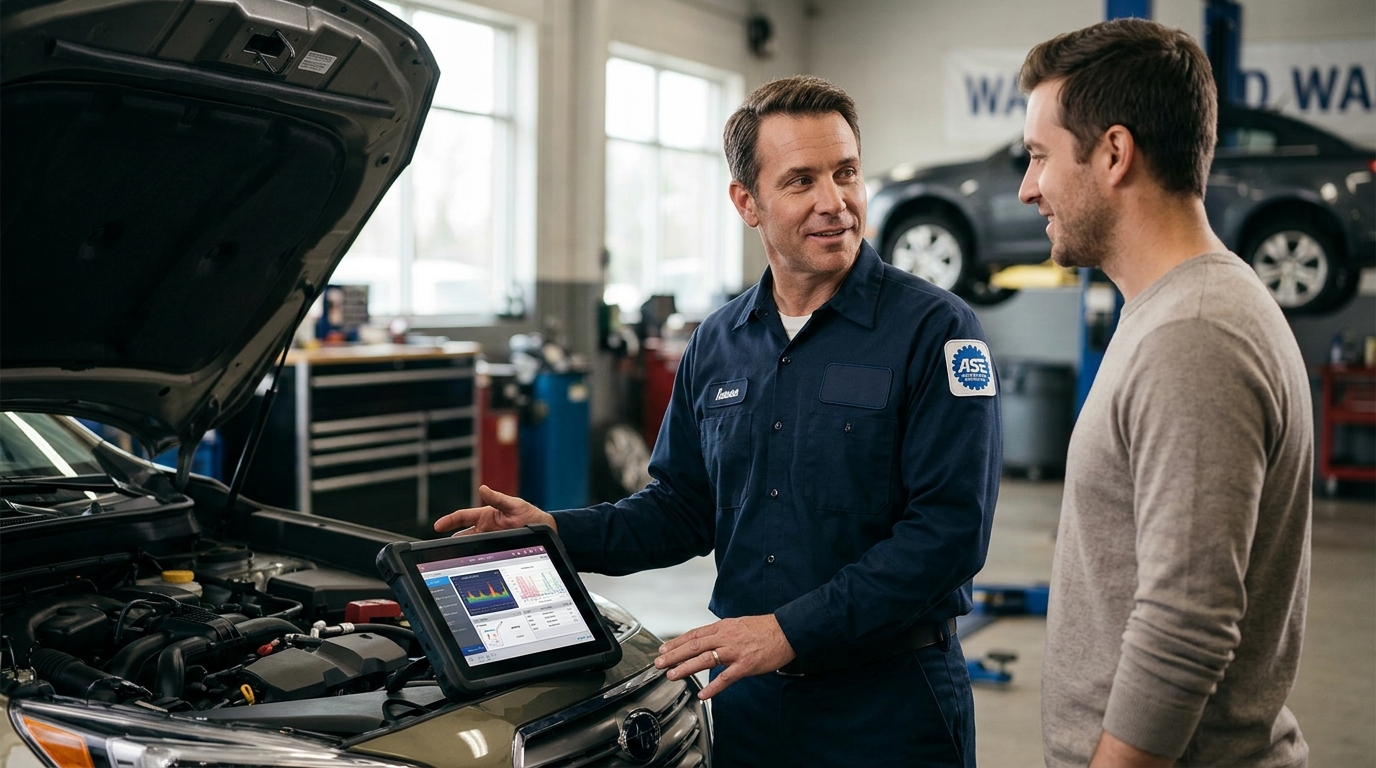
7 Qualifications to Look for in a Technician Diagnosing Your Check Engine Light
When your check engine light illuminates, the quality of the diagnosis depends heavily on the technician's formal training and certification. GNL Auto Service in Walpole, MA, emphasizes that proper certification ensures accurate fault code interpretation and prevents unnecessary repairs. This listicle outlines the specific credentials and skills you should verify before handing over your keys.
1. ASE Certification
ASE certification is the industry standard for verifying a technician's technical competence. The National Institute for Automotive Service Excellence (ASE) administers exams that test a technician's knowledge of specific vehicle systems. A certified technician has passed rigorous testing in areas like engine performance, electrical systems, and emissions. This credential provides a baseline of trust that the individual understands the underlying mechanics behind a fault code. according to How to Become For additional details, review the .
2. Manufacturer-Specific Training
Manufacturer training is essential for vehicles with proprietary diagnostic protocols. Many modern vehicles, particularly those from brands like Chevrolet, GMC, and Cadillac, use specific software and procedures that differ from generic tools. Technicians who have completed factory training programs are better equipped to access deep-level data and perform manufacturer-specific resets. This specialized knowledge is critical for accurately diagnosing intermittent issues that generic scanners might miss. For additional details, review the Customer Experience.
3. Diagnostic Experience
Diagnostic experience is the practical application of theoretical knowledge in real-world scenarios. A seasoned technician has encountered a wide variety of failure modes and knows how to isolate the root cause rather than just clearing the code. This experience allows them to recognize patterns and avoid the common pitfall of replacing parts that are not actually faulty. At GNL Auto Service, our team brings over 15 years of hands-on experience to every diagnosis. For additional details, review the Frequently Asked Questions.
4. OEM Diagnostic Tools
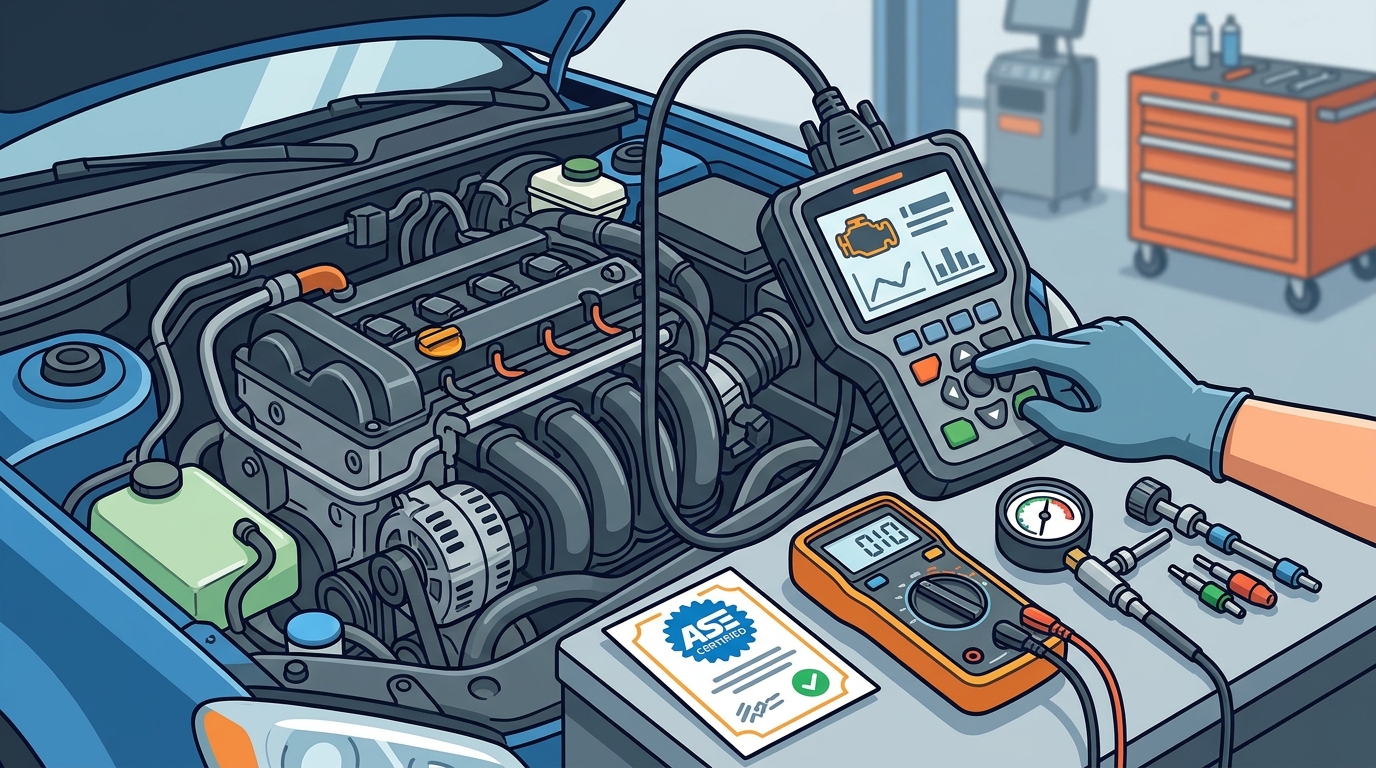
OEM diagnostic tools are the hardware required to interface with a vehicle's computer systems. While generic OBD2 scanners can read basic codes, they often lack the ability to perform advanced bi-directional controls or module reprogramming. Shops that invest in Original Equipment Manufacturer (OEM) tools can monitor live data, execute actuator tests, and verify repairs with the same precision as a dealership. This level of tooling is a strong indicator of a shop's commitment to thorough diagnostics. For additional details, review the About.
5. Communication Skills
Communication skills are the ability to translate technical findings into clear, actionable advice for the customer. A qualified technician should be able to explain what the check engine light means, why it is important, and what the repair entails without using excessive jargon. They should also provide you with a written estimate that details the labor and parts involved. Clear communication builds trust and ensures you are not paying for unnecessary work.
6. Warranty Offerings
7. Shop Reputation
Shop reputation is the collective perception of a business based on customer feedback and community standing. In a local market like Walpole, MA, word of mouth is a powerful indicator of quality. A shop with a long-standing presence in the community and positive reviews is more likely to prioritize customer satisfaction over quick, low-quality fixes. GNL Auto Service has built its reputation on providing honest, expert care to local drivers for over 15 years.
Choosing the Right Technician
Frequently Asked Questions
What is ASE certification?
ASE certification is a credential awarded by the National Institute for Automotive Service Excellence that verifies a technician's technical knowledge through standardized testing.
Do I need a dealership to diagnose my check engine light?
No, independent shops with ASE-certified technicians and OEM tools can often diagnose and repair issues just as effectively as a dealership, often at a lower cost.
What does a check engine light usually mean?
A check engine light indicates that the vehicle's computer has detected a malfunction in the engine or emissions control system, which can range from a loose gas cap to a serious engine issue.
How long does a check engine light diagnosis take?
A basic diagnosis can take 30 minutes to an hour, but complex issues may require several hours of testing and data analysis to isolate the root cause.
Can I drive with the check engine light on?
If the light is steady, you can usually drive cautiously while scheduling a repair. If the light is flashing, it indicates a severe misfire, and you should stop driving immediately to prevent engine damage.
Why is manufacturer training important for diagnosis?
Manufacturer training provides technicians with access to proprietary software and procedures that are necessary for diagnosing specific vehicle models and accessing deep-level data.