
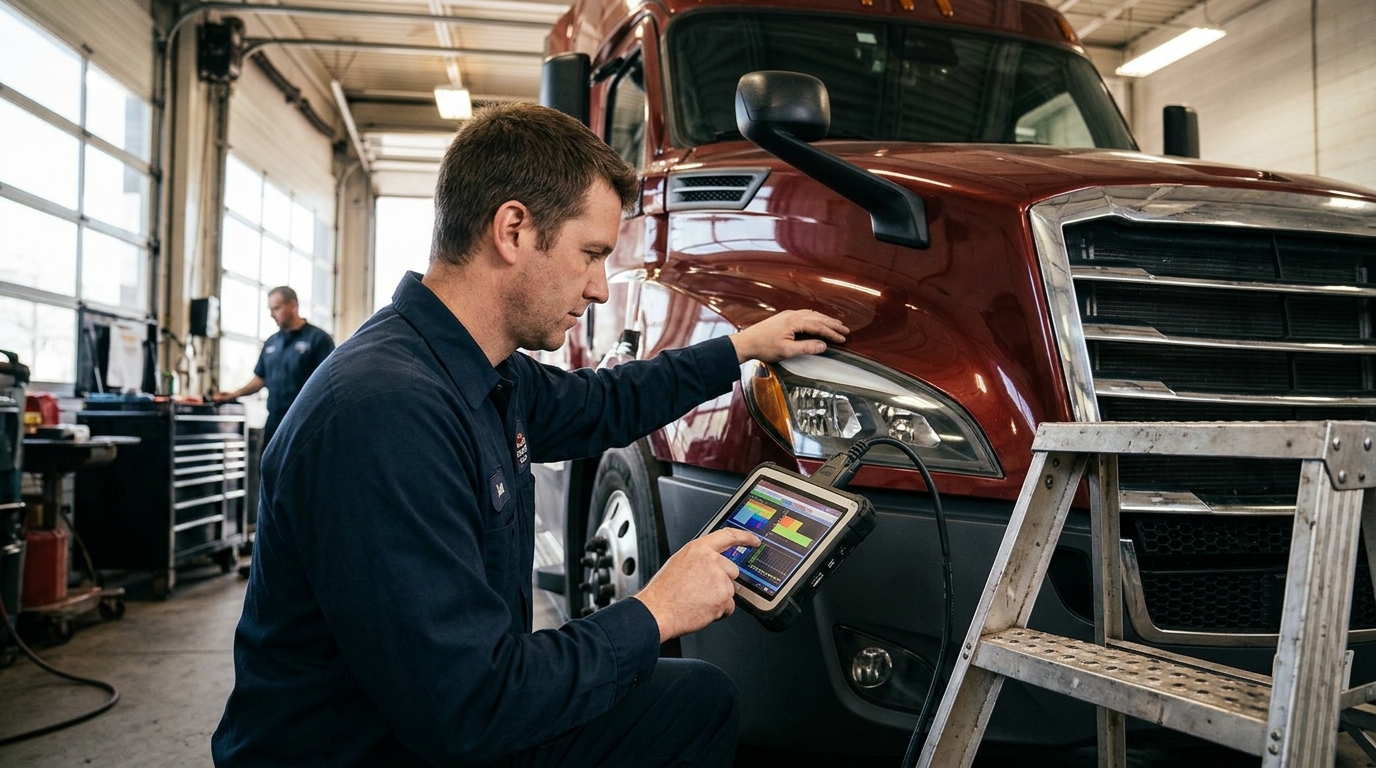
Truck diagnostics is a systematic process of using specialized software and hardware to identify mechanical, electrical, and emissions issues in heavy-duty and light-duty trucks. A complete scan goes far beyond reading a single check engine light. It involves deep data analysis, component testing, and verification to ensure the root cause is found. GNL Auto Service in Walpole, MA, utilizes this rigorous approach to provide accurate repairs for local drivers.
1. Initial Vehicle Inspection and History Review
Start with a visual check and driver interview to establish a baseline. Before plugging in any tools, a technician must inspect the truck for visible leaks, damaged wiring, or loose connections. They should also ask the driver about when the issue started and under what conditions. This context helps narrow down the potential problem areas before digital testing begins.
2. Full System Scan for Diagnostic Trouble Codes
Retrieve all stored and pending codes from every available module. A complete scan reads the Powertrain Control Module (PCM) and other Electronic Control Units (ECUs). It is not enough to look only at the engine; technicians must check transmission, ABS, and body control modules. This ensures no secondary issues are overlooked during the initial data collection phase.
3. Live Data Stream Analysis
Monitor real-time sensor inputs to identify intermittent faults. Live data allows the technician to see how sensors react while the engine is running or idling. They look for values that are out of range or fluctuating erratically. This step is critical for diagnosing problems that do not trigger a permanent code but still affect performance.
4. Component and Circuit Testing
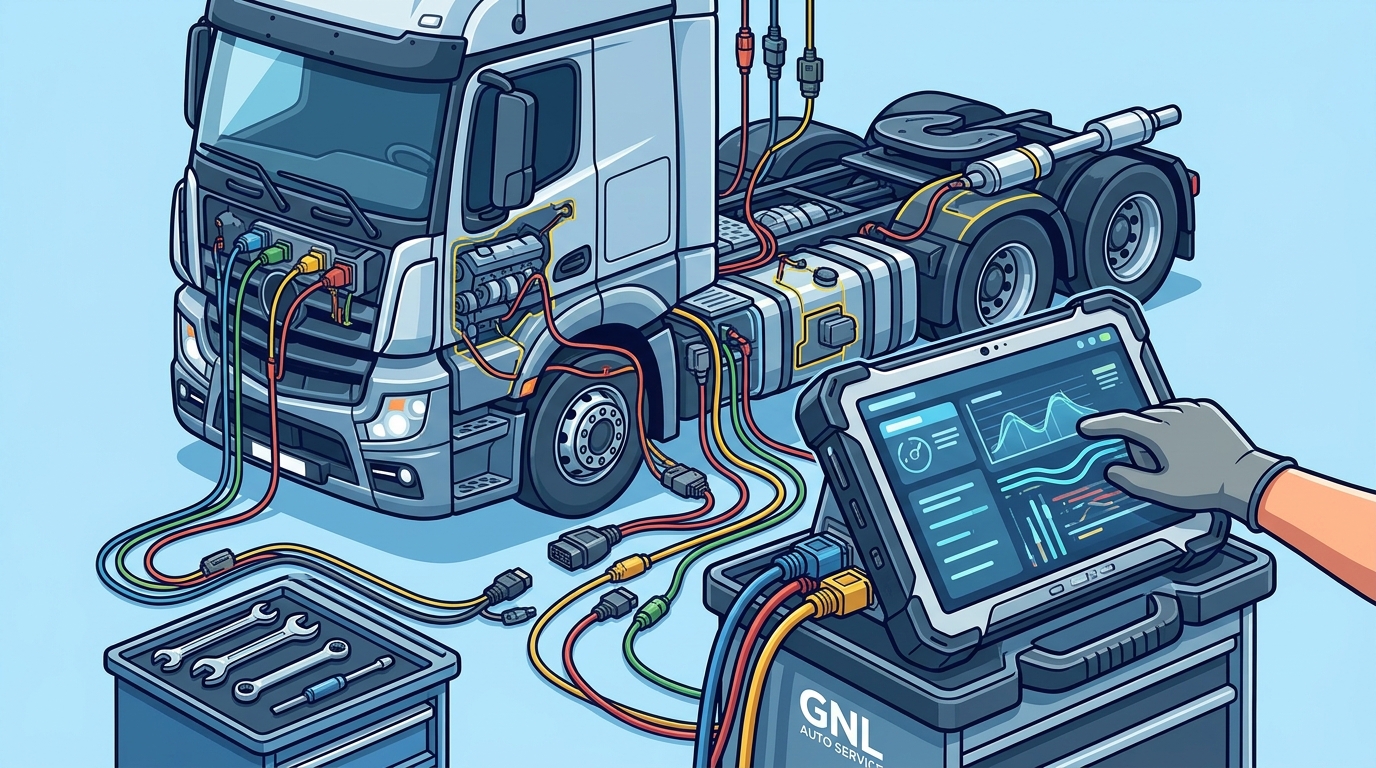
5. Actuator and System Function Tests
Command components to operate to confirm they respond correctly. Modern scan tools can command actuators like fuel injectors, solenoids, and fans to run. The technician observes whether the component responds as expected. This active testing confirms whether the issue is with the control module or the physical part itself.
6. Road Test and Dynamic Verification
Drive the truck to reproduce symptoms under real-world conditions. Some issues only appear under load or at specific speeds. A road test allows the technician to monitor live data while the truck is in operation. This step verifies that the suspected fault actually correlates with the driver's reported symptoms.
7. Repair Verification and Code Clearing
Confirm the fix works and ensure no new codes appear after driving. After the repair, the technician must re-scan the vehicle to ensure the original codes are cleared. They also perform a final drive cycle to verify that the system remains stable. This final step ensures the customer is not sent back with a recurring issue.
Choosing the Right Diagnostic Approach
Frequently Asked Questions
What is a truck diagnostic scan?
A truck diagnostic scan is a digital inspection process that uses software to communicate with the vehicle's computer systems to identify faults and monitor performance data.
How long does a complete truck diagnostic take?
A complete diagnostic typically takes between 30 minutes to two hours, depending on the complexity of the issue and the number of systems involved.
Can a scan tool fix a truck problem?
No, a scan tool only identifies problems. It cannot repair mechanical or electrical components, though it can reset certain adaptive values or clear codes after a repair.
Why do trucks need more than a basic code read?
Trucks have complex systems with multiple modules. A basic code read may miss intermittent issues or secondary faults that require live data analysis and component testing to diagnose accurately.
Where can I get a professional truck diagnostic in Walpole, MA?
GNL Auto Service in Walpole, MA, provides professional automotive repair and diagnostic services for trucks and other vehicles in the Norfolk County area.