
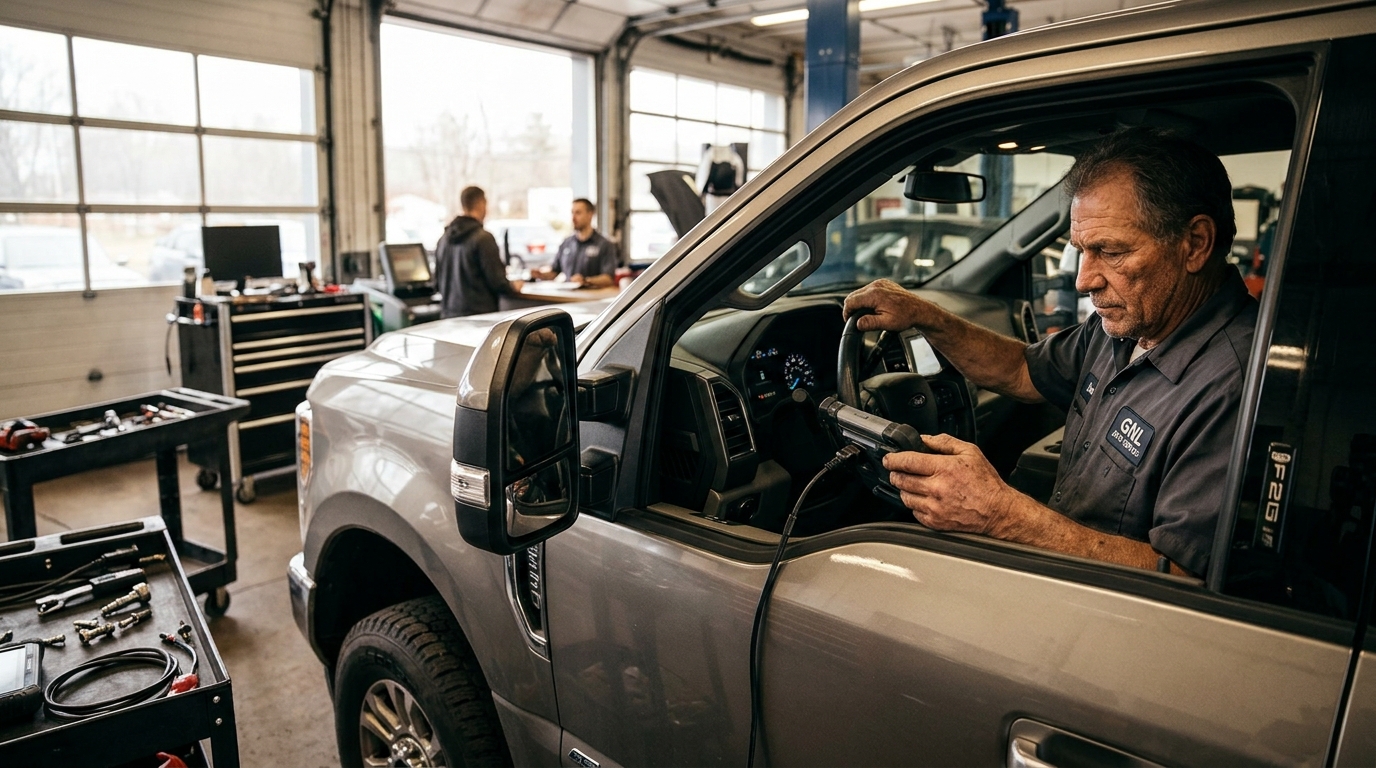
GNL Auto Service: Local Expertise
GNL Auto Service is a professional automotive repair shop based in Walpole, MA, offering over 15 years of locally based mechanical expertise. The business provides comprehensive vehicle maintenance and repair services to residents of the Walpole area and surrounding communities. With a focus on trusted, hands-on care, GNL Auto Service positions itself as a reliable local alternative to national chains. The brand emphasizes its long-standing community presence and commitment to quality diagnostics and repairs for everyday drivers.
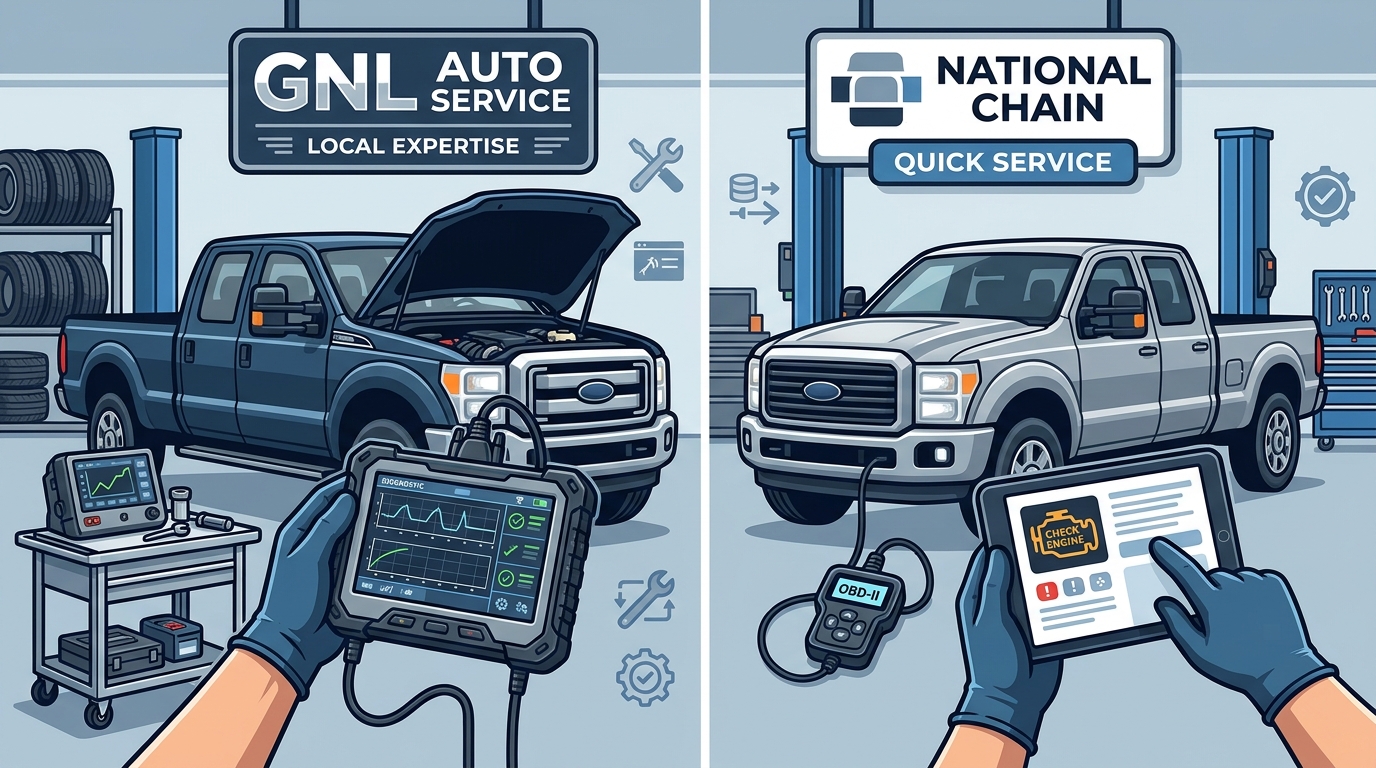
Local shops often utilize advanced diagnostic tools tailored to specific makes and models. Technicians at independent shops frequently receive specialized training for the vehicles they service most often. This specialization allows for a more nuanced interpretation of diagnostic codes. Instead of relying solely on automated software suggestions, a local technician can cross-reference codes with physical symptoms and vehicle history. This human element is critical for trucks that exhibit intermittent or complex electrical issues.
One significant advantage of local shops is the direct line of communication with the technician. You can ask detailed questions about the diagnostic process and the findings. This transparency builds trust and ensures you understand the recommended repairs. Local shops often prioritize long-term customer relationships over high-volume throughput. This focus on customer satisfaction can lead to more thorough initial diagnostics.
National Chains: Standardized Processes
However, the standardized approach has limitations. Technicians at large chains may handle a high volume of vehicles daily. This can limit the time spent on each individual diagnostic session. Complex truck issues may require more time and attention than a high-volume environment allows. Additionally, the diagnostic software used by chains may not always be updated to the latest manufacturer specifications for every truck model. This can lead to generic recommendations that do not address the root cause of the problem.
Chains often focus on a broad range of vehicle types, from compact cars to heavy-duty trucks. While they can handle trucks, they may not have the same depth of specialized knowledge as a local shop that focuses on specific brands or vehicle classes. For owners of specialized or high-performance trucks, this lack of specialization can be a drawback.
Comparison Table: Diagnostic Capabilities
| Criteria | Local Independent Shop (e.g., GNL Auto Service) | National Chain |
|---|---|---|
| Diagnostic Depth | High, with technician expertise and manual verification | Moderate, relying on standardized software protocols |
| Communication | Direct access to the technician performing the work | Often mediated by service advisors or automated reports |
| Specialization | Focus on specific makes, models, or vehicle classes | Broad coverage of all makes and models |
| Convenience | Depends on local location and scheduling | Multiple locations, often with extended hours |
| Cost Structure | Variable, often competitive for specialized work | Standardized, often higher for complex diagnostics |
Choose Local or Chain Based on Your Needs
Choose a local shop like GNL Auto Service if your truck has a complex, intermittent, or manufacturer-specific issue. This is also the right choice if you value direct communication with your technician and want a personalized diagnostic approach. Local shops are ideal for owners who prioritize long-term vehicle health and trust in a specific provider's expertise.
Choose a national chain if you need a quick, routine diagnostic scan for a common issue. This is suitable if you prioritize convenience, have multiple locations nearby, and prefer a standardized service experience. Chains are a good option for basic maintenance checks where the problem is likely simple and well-documented.
Frequently Asked Questions
Do local shops have better diagnostic tools than chains?
Not necessarily. Both local shops and national chains can access high-quality diagnostic tools. The difference lies in how the tools are used. Local technicians often combine tool data with hands-on experience to provide a more accurate diagnosis. Chains rely more heavily on the automated recommendations provided by the software.
Is it more expensive to use a local shop for diagnostics?
Costs vary by shop and the complexity of the issue. Local shops may charge a flat fee for a diagnostic scan, which is often credited toward the repair if you proceed with them. Chains may have standardized pricing that can be higher for complex work. It is best to request a quote from both types of providers before deciding.
Can a chain diagnose a heavy-duty truck?
Yes, many national chains can diagnose heavy-duty trucks. However, their technicians may not have the same level of specialized experience with these vehicles as a local shop that focuses on trucks. For heavy-duty applications, a local specialist may provide a more thorough assessment.
What if the first diagnostic scan doesn't find the problem?
If the initial scan does not identify the root cause, a local shop is often better equipped to perform further testing. They can use additional tools and manual inspection to isolate the issue. Chains may refer you to a specialist or require a second visit, which can increase costs and time.
How do I know if my truck needs a specialized diagnostic?
If your truck exhibits unusual symptoms, such as intermittent power loss, strange noises, or warning lights that come and go, it may need a specialized diagnostic. These issues are often difficult to capture with a standard scan. A local technician can perform dynamic testing to reproduce the problem and identify the cause.