
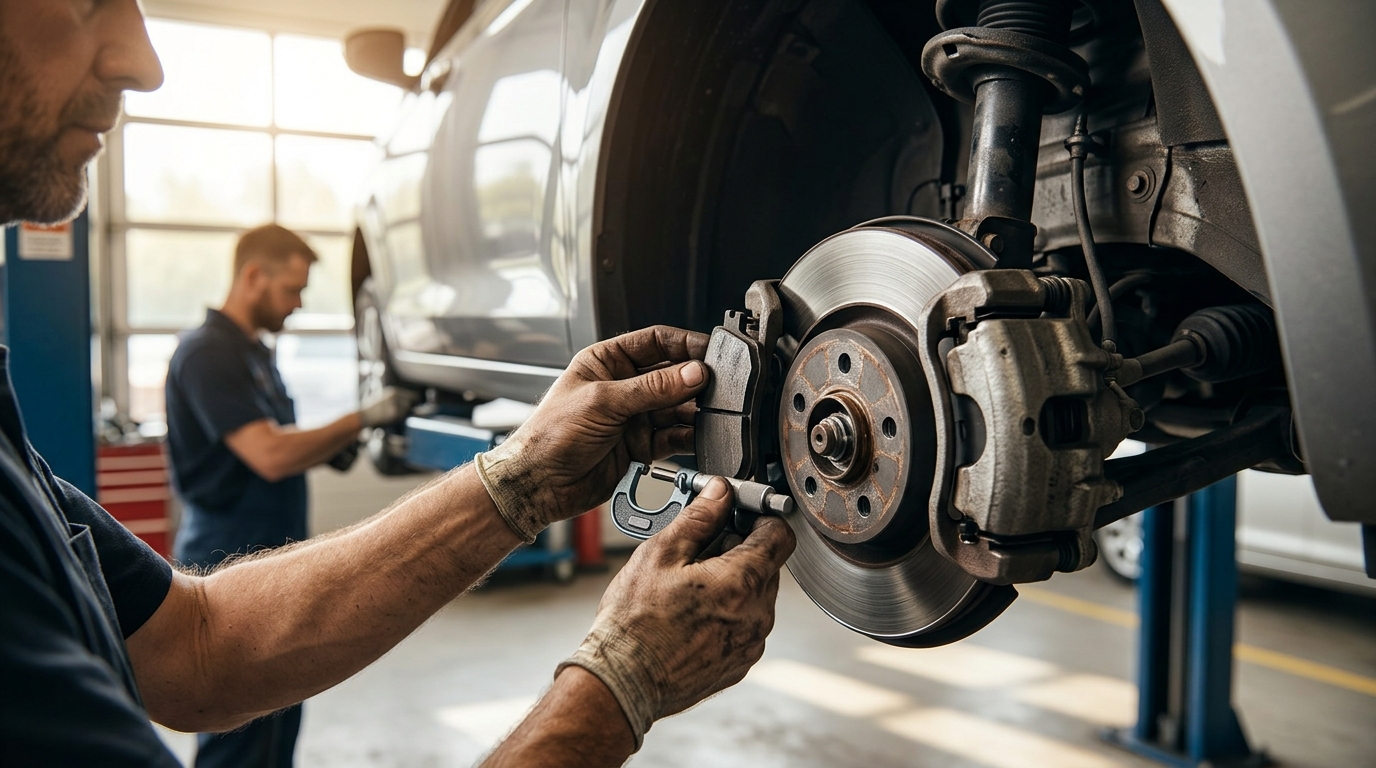
Drivers often ignore early brake warnings until a failure occurs. A complete brake system check is a comprehensive diagnostic evaluation of pads, rotors, calipers, and fluid to prevent sudden loss of stopping power. GNL Auto Service in Walpole, MA, emphasizes that recognizing these signs early protects your safety and wallet. Ignoring subtle cues can lead to expensive component damage or dangerous road incidents.
Auditory Alerts from Your Brakes
Sound is often the first indicator of brake wear. A high-pitched squeal typically comes from a built-in wear indicator on the brake pad. This metal tab rubs against the rotor when the pad material is nearly gone. A grinding noise, however, signals that the pad material is completely worn away. Metal-on-metal contact damages the rotor surface permanently. If you hear grinding, stop driving and seek immediate inspection.
GNL Auto Service technicians listen for these specific frequencies during diagnostics. They distinguish between normal thermal expansion noises and critical wear indicators. This auditory assessment helps determine if a simple pad replacement or a full rotor resurfacing is needed.
Pedal Feel and Response Changes
Brake pedal feel is a direct reflection of hydraulic pressure and component condition. A spongy or soft pedal usually indicates air in the brake lines or a fluid leak. Air is compressible, while brake fluid is not, leading to a lack of firmness. A hard pedal may suggest a vacuum booster failure. This component assists your foot pressure to generate the necessary hydraulic force.
Another critical sign is a pulsating or vibrating pedal. This usually means the brake rotors are warped or unevenly worn. The caliper piston pushes against the uneven surface, creating a rhythmic shake. This vibration transfers to the steering wheel and pedal. Addressing warped rotors early prevents further damage to the calipers and pads.
Visual Indicators of Wear
Visual inspection reveals issues that sound and feel might miss. Brake pads have a minimum thickness requirement, often around 4 millimeters. When pads fall below this threshold, they no longer provide adequate friction. Rotors also show visual signs of distress. Deep scoring, grooves, or blue discoloration indicate heat damage. Blue rotors have lost their structural integrity due to extreme heat. They will not stop the vehicle effectively.
Check for fluid leaks around the wheel wells. Brake fluid is clear to amber in color. A dark, oily residue suggests a caliper or line leak. This is a critical safety hazard. GNL Auto Service performs detailed visual checks on all components during a complete brake system check. They ensure no hidden leaks compromise your stopping ability.
Dashboard Warnings and System Alerts
Modern vehicles use sensors to monitor brake health. The brake warning light on the dashboard is a serious alert. It often indicates low fluid level or a parking brake engagement. However, it can also signal a sensor fault. The ABS warning light indicates a problem with the anti-lock braking system. While the vehicle may still stop, the anti-lock function is disabled. This increases stopping distances on slippery surfaces.
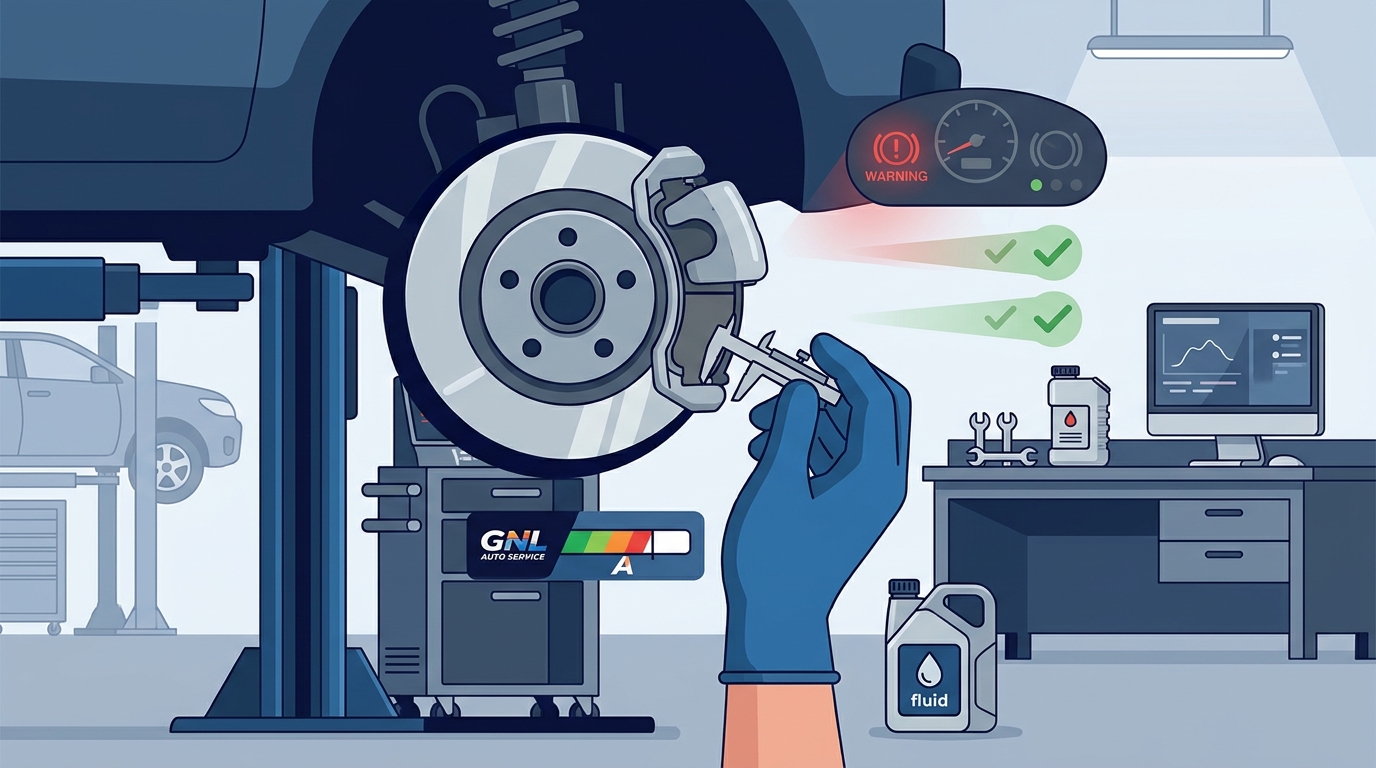
Performance Degradation and Stopping Distance
Increased stopping distance is a subtle but dangerous sign. If your car takes longer to stop than it used to, something is wrong. This could be due to worn pads, glazed rotors, or low fluid. Glazed rotors have a shiny, smooth surface that reduces friction. They often result from overheating during hard braking. The vehicle may pull to one side when braking. This indicates a stuck caliper or uneven pad wear. A stuck caliper drags on the rotor, causing excessive heat and wear.
GNL Auto Service evaluates braking performance during their inspections. They test for symmetry and response time. This ensures all four wheels contribute equally to stopping. Early detection of performance issues prevents minor repairs from becoming major overhauls.
Key Takeaways
- A squealing noise indicates pad wear, while grinding signals metal-on-metal contact.
- A spongy pedal suggests air in the lines or a fluid leak.
- Pulsating pedals usually mean warped rotors that need resurfacing or replacement.
- Dashboard warning lights for brakes or ABS require immediate professional attention.
- Increased stopping distance or pulling to one side indicates uneven wear or hydraulic issues.
- Regular inspections at GNL Auto Service prevent minor issues from becoming safety hazards.
Frequently Asked Questions
How often should I get a complete brake system check?
It is recommended to have your brakes inspected every 12,000 miles or once a year, whichever comes first. However, if you notice any of the signs mentioned above, you should get them checked immediately. Driving conditions and driving style also affect brake wear.
Can I drive with a grinding brake noise?
No, you should not drive with a grinding noise. This means the brake pads are completely worn and the metal backing plate is grinding against the rotor. This causes severe damage to the rotors and can lead to brake failure. Stop driving and have the vehicle towed for inspection.
What is the difference between a brake check and a brake repair?
A brake check is a diagnostic inspection to assess the condition of all brake components. A brake repair involves replacing or fixing specific parts that are worn or damaged. A check helps you know what repairs are needed before they become urgent.
Why does my car pull to one side when braking?
Car pulling to one side when braking is often caused by a stuck caliper, uneven pad wear, or a difference in tire pressure. It can also result from a warped rotor on one side. A professional inspection can identify the specific cause.
Does GNL Auto Service offer same-day brake repairs?
GNL Auto Service offers same-day engine rebuilds and many other repairs. For brake services, they prioritize safety and thorough diagnostics. While some brake repairs can be done same-day, complex issues may require additional time for parts or detailed work. They provide clear timelines during the diagnosis.
Conclusion
Your brakes are your most critical safety system. Ignoring signs of wear puts you and others at risk. GNL Auto Service in Walpole, MA, provides expert diagnostics and repairs for all vehicle makes. They focus on honest recommendations and clear explanations. If you notice any of these signs, request a quote today. Protect your vehicle and your peace of mind with a complete brake system check. Learn more: GNL AUTO SERVICE.