
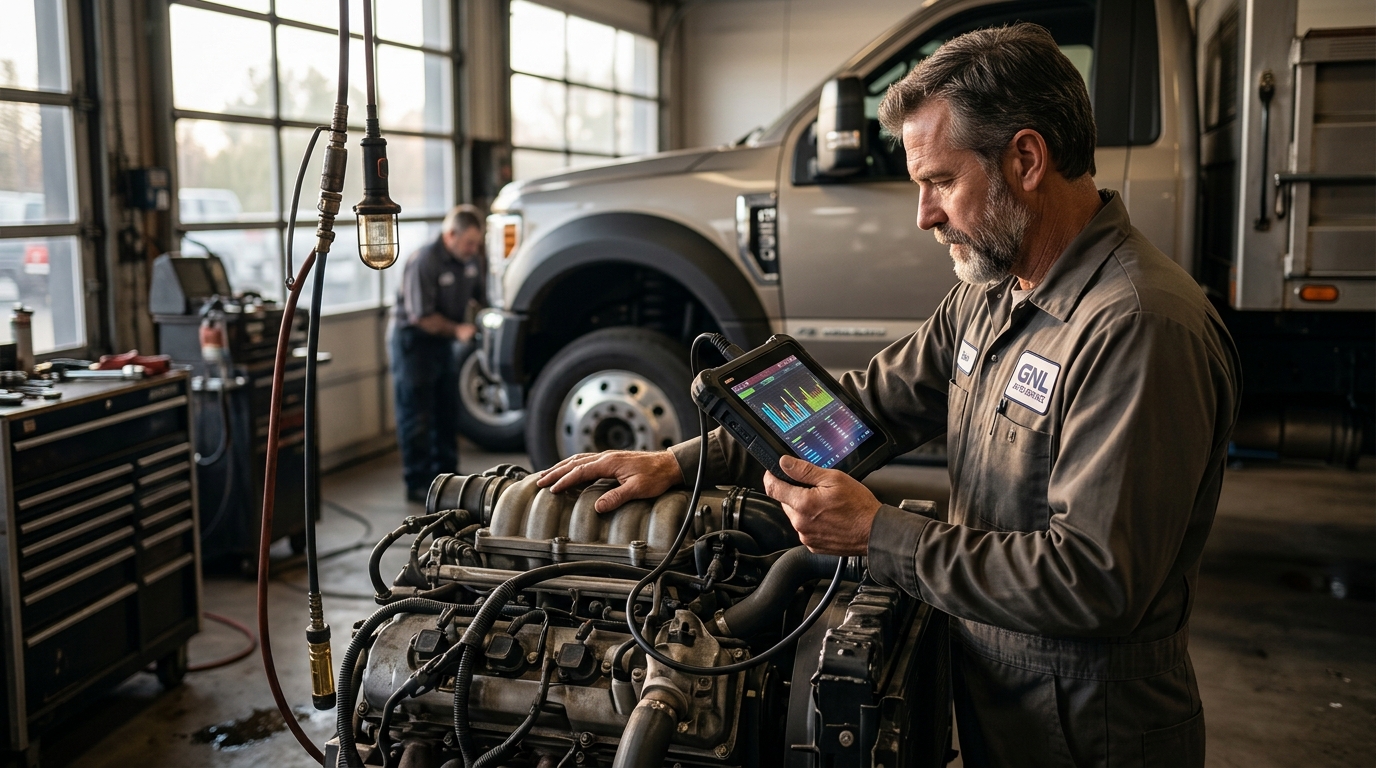
Bring your truck to GNL Auto Service in Walpole, MA, for advanced scan-tool diagnostics. This shop specializes in professional engine diagnostics, repairs, and rebuilds, offering over 15 years of local automotive experience. This guide covers the diagnostic process, the specific equipment used, and how to handle diesel and commercial truck service needs in the Norfolk County area.
Truck Diagnostics: The Diagnostic Process
Truck diagnostics is the systematic process of identifying mechanical, electrical, and emissions issues using specialized software and hardware. Unlike basic check-engine light checks, advanced diagnostics involve reading live data streams, clearing fault codes, and performing system-specific tests. For truck owners in Walpole, understanding this process helps you distinguish between a simple sensor failure and a complex engine management issue. For additional details, review the Customer Experience.
The Role of OBD-II and Beyond
Most modern trucks use the On-Board Diagnostics (OBD-II) standard, which allows technicians to communicate with the vehicle's computer. However, trucks often have multiple control modules, including the Engine Control Module (ECM), Transmission Control Module (TCM), and Body Control Module. Advanced diagnostics require a tool that can access all these modules simultaneously. GNL Auto Service utilizes professional-grade equipment to ensure that no module is overlooked during the inspection. For additional details, review the Frequently Asked Questions.
Live Data Analysis
Live data analysis is the practice of monitoring real-time sensor inputs while the vehicle is running or being driven. This method is critical for diagnosing intermittent issues that do not trigger a permanent fault code. For example, a fuel pressure sensor might only fail under high load. By monitoring live data, a technician can see exactly when and how the system deviates from manufacturer specifications. This level of detail is essential for accurate repairs and prevents unnecessary part replacements. For additional details, review the About.
System-Specific Tests
System-specific tests are active commands sent to the vehicle's computer to actuate components like fuel injectors, solenoids, and actuators. These tests verify that the hardware responds correctly to the software's commands. If a component does not respond, the technician knows the issue is mechanical rather than electrical. This approach saves time and money by targeting the exact failure point. At GNL Auto Service, technicians perform these tests as part of their standard diagnostic protocol to ensure thoroughness.
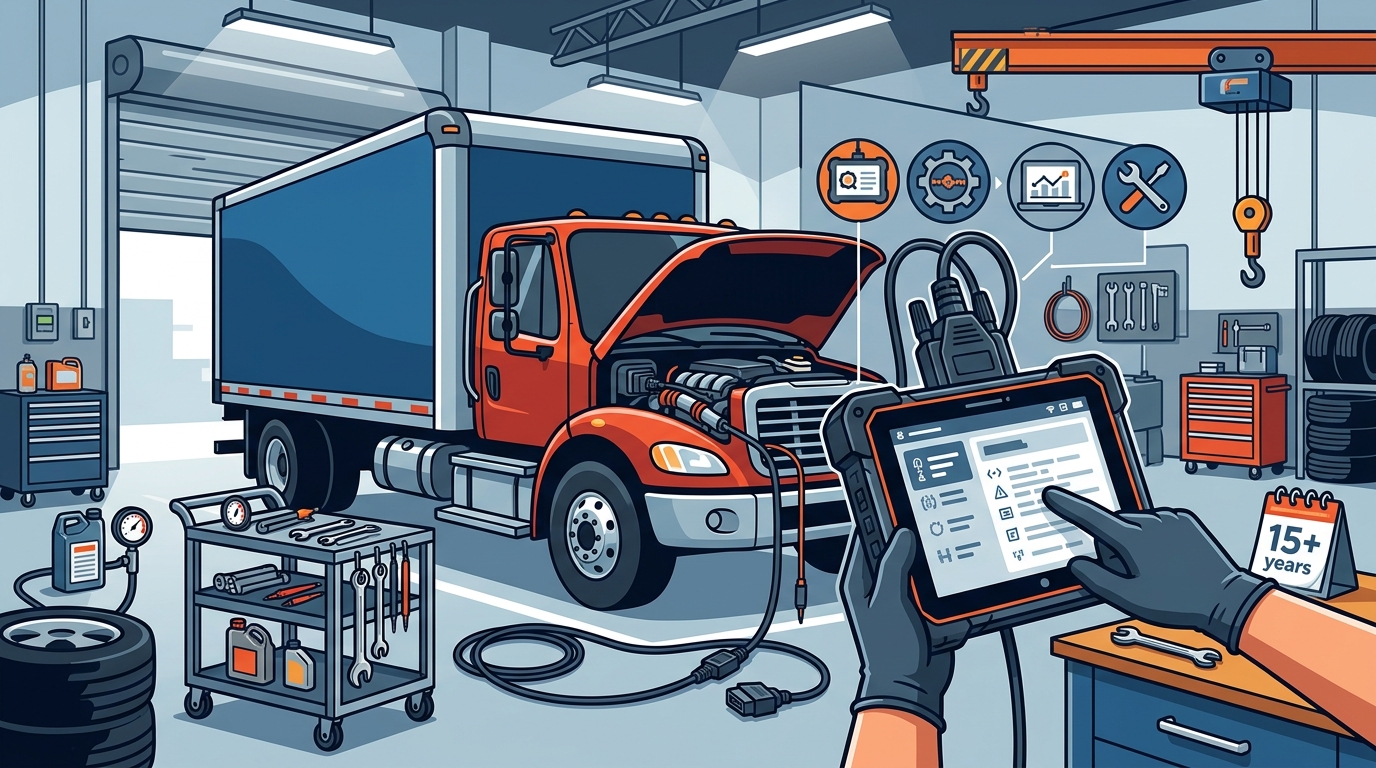
Scan Tool Equipment: What to Look For
Consumer vs. Professional Grade Tools
Consumer-grade tools are typically limited to reading and clearing basic OBD-II codes. They cannot perform bidirectional controls or access manufacturer-specific modules. Professional-grade tools, on the other hand, allow technicians to command the vehicle to perform specific actions. For instance, a professional tool can command a fuel injector to open and close, or a transmission to shift gears. This capability is crucial for diagnosing complex issues that do not present obvious symptoms.
Manufacturer-Specific Software
Manufacturer-specific software is proprietary diagnostic software provided by vehicle manufacturers. This software often contains detailed information about the vehicle's systems, including wiring diagrams, component locations, and specific test procedures. Access to this software is typically restricted to authorized dealerships and professional repair shops. GNL Auto Service has access to the necessary software to diagnose a wide range of truck brands, ensuring that you receive accurate and comprehensive diagnostics.
Table: Scan Tool Capabilities
| Capability | Consumer-Grade Tool | Professional-Grade Tool |
|---|---|---|
| Read/Clear OBD-II Codes | Yes | Yes |
| Live Data Monitoring | Limited | Comprehensive |
| Bidirectional Control | No | Yes |
| Manufacturer-Specific Software | No | Yes |
| Advanced Coding/Programming | No | Yes |
Diesel and Commercial Truck Service
Diesel and commercial truck service is a specialized field of automotive repair that addresses the unique requirements of heavy-duty vehicles. These vehicles operate under different conditions than passenger cars, requiring specific expertise and equipment. Diesel engines, for example, have complex fuel injection systems and emissions controls that differ significantly from gasoline engines. Commercial trucks also have heavy-duty transmissions, air brake systems, and electrical architectures that require specialized knowledge.
Diesel Engine Diagnostics
Diesel engine diagnostics is the process of identifying issues in diesel powertrains, including fuel injection, turbocharging, and emissions systems. Modern diesel engines use high-pressure common rail fuel injection systems, which are sensitive to fuel quality and mechanical wear. Diagnostics for these systems require specialized tools that can measure fuel pressure, injector timing, and rail pressure. GNL Auto Service has the expertise to diagnose and repair these complex systems, ensuring that your diesel truck runs efficiently and reliably.
Commercial Truck Considerations
Emissions and Environmental Compliance
Emissions and environmental compliance is a critical aspect of diesel and commercial truck service. Modern diesel trucks are equipped with emissions control systems, including Diesel Particulate Filters (DPF), Selective Catalytic Reduction (SCR) systems, and Exhaust Gas Recirculation (EGR) systems. These systems are designed to reduce harmful emissions, but they can also be prone to clogging and failure. Diagnostics for these systems require specialized tools that can monitor soot load, urea levels, and exhaust gas temperatures. GNL Auto Service ensures that your truck meets all emissions standards, helping you avoid fines and penalties.
Key Takeaways
- Advanced truck diagnostics requires professional-grade scan tools with bidirectional control and manufacturer-specific software.
- Live data analysis is essential for diagnosing intermittent issues that do not trigger permanent fault codes.
- System-specific tests verify that hardware components respond correctly to software commands.
- Consumer-grade scan tools are limited to basic OBD-II code reading and lack the depth required for modern trucks.
- Diesel engines require specialized diagnostics for high-pressure fuel injection and emissions control systems.
- Commercial truck service must prioritize minimal downtime and maximum uptime for fleet operators.
- GNL Auto Service in Walpole, MA, offers over 15 years of local experience in professional automotive repair.
- Choosing a shop with access to manufacturer-specific software ensures accurate and comprehensive diagnostics.
Frequently Asked Questions
What is the difference between a basic scan tool and a professional-grade scan tool?
Why is live data analysis important for truck diagnostics?
Live data analysis allows technicians to monitor real-time sensor inputs while the vehicle is running. This is crucial for diagnosing intermittent issues that do not trigger permanent fault codes, such as a fuel pressure sensor that only fails under high load.
Can I diagnose my truck myself with a consumer-grade scan tool?
You can read basic OBD-II codes with a consumer-grade scan tool, but you will not be able to perform advanced diagnostics. Consumer-grade tools lack the capability to perform bidirectional controls or access manufacturer-specific modules, which are essential for accurate diagnosis of complex issues.
What is bidirectional control in scan tools?
Bidirectional control is the ability of a scan tool to send commands to the vehicle's computer to actuate components like fuel injectors, solenoids, and actuators. This allows technicians to verify that hardware responds correctly to software commands, helping to distinguish between mechanical and electrical issues.
Why is manufacturer-specific software important for truck diagnostics?
Manufacturer-specific software contains detailed information about the vehicle's systems, including wiring diagrams, component locations, and specific test procedures. Access to this software is typically restricted to authorized dealerships and professional repair shops, ensuring that technicians have the necessary information to perform accurate diagnostics.
What are the unique challenges of diesel truck diagnostics?
Diesel trucks have complex fuel injection systems and emissions controls that differ significantly from gasoline engines. Diagnostics for these systems require specialized tools that can measure fuel pressure, injector timing, and rail pressure. Technicians must also be familiar with emissions control systems like DPF, SCR, and EGR.
How can I minimize downtime for my commercial truck?
To minimize downtime, choose a repair shop with experienced technicians and professional-grade diagnostic equipment. Accurate and thorough diagnostics are essential for identifying the root cause of an issue quickly and efficiently. GNL Auto Service understands the importance of uptime for commercial vehicle owners and strives to provide fast, accurate repairs.
Where can I find advanced truck diagnostics in Walpole, MA?
GNL Auto Service in Walpole, MA, offers advanced truck diagnostics with professional-grade equipment and over 15 years of local experience. They specialize in engine diagnostics, repairs, and rebuilds, providing comprehensive care for trucks in the Norfolk County area.
Conclusion
Choosing the right shop for advanced truck diagnostics is critical for maintaining the reliability and performance of your vehicle. GNL Auto Service in Walpole, MA, provides the expertise, equipment, and local knowledge you need for accurate and comprehensive diagnostics. With over 15 years of experience and a focus on professional automotive repair, GNL Auto Service is a trusted choice for truck owners in the Norfolk County area. To schedule your diagnostic appointment, contact GNL Auto Service today.